
Thursday, April 23, 2015


Wednesday, April 22, 2015
Zayde raises his voice to tell a new story

There I was at the seder table at Passover looking just like
the Zayde in the picture book. Long beard, white robe. I looked at the book and saw what Zayde was
proclaiming with such great glee and I was more than a little
disappointed. The book allows for an
ambiguous reading.
"The bad goyim have always wanted to kill the Yidden." “Bad Goyim” here could mean bad non-Jews who want to kill Yidden versus good non-Jews who do not or simply that Goyim are by definition bad and want to “kill out” (Yeshivish for genocidal murder) the Yidden (Yiddish for Jews). I believe the intent of the Hagadah is the first. There are indeed those in every generation who may hate Jews and despise our the ethical monotheism we stand for and try to destroy us and our message. God protects us and our mission from ultimate destruction. I deeply believe that. At the same time, I think most children would read the words as "Goyim are bad and always want to kill Jews."
"The bad goyim have always wanted to kill the Yidden." “Bad Goyim” here could mean bad non-Jews who want to kill Yidden versus good non-Jews who do not or simply that Goyim are by definition bad and want to “kill out” (Yeshivish for genocidal murder) the Yidden (Yiddish for Jews). I believe the intent of the Hagadah is the first. There are indeed those in every generation who may hate Jews and despise our the ethical monotheism we stand for and try to destroy us and our message. God protects us and our mission from ultimate destruction. I deeply believe that. At the same time, I think most children would read the words as "Goyim are bad and always want to kill Jews."
It is a familiar formulation of Jewish history.
They hate us and want to kill us.
The “they” is interchangeable. If we have friends among the nations for
a time, they will one day be our enemies.
As Rashi brings down in his commentary on Genesis 33:4 “Halacha b'yadu'a Esav soneh l'Yaakov “ “It is the law and well-known that Esau hates
Jacob.” The enmities between Jacob and
Esau, Jews and the European World, and Isaac and
Ishmael, The Jews and Muslims, are eternal unchangeable facts of life and our
history proves it. (Rashi, on the other hand, probably was commenting on the relationship of two brothers not presenting a template for history)
Even the gentile prophet Bilaam confirmed it.
As I see them from the mountain tops,
Gaze on them from the heights,
Behold it is a people that dwells alone,
Not reckoned among the nations. (Num. 23: 9)
A people that dwells alone!
We a
lonely, pariah nation with no friends, no allies, perpetually hated and under
siege.
In an
important essay*, Rabbi Jonathan Sacks shares what he calls an "epiphany" in which he realizes how dangerous this thinking can be and has been for the Jewish people.
He writes;
He writes;
"If
you define yourself as the people that dwells alone, you are likely to find
yourself alone. That
is not a safe place to be."
The Talmud explains that Bilaam’s blessings were really curses. To be alone and isolated is no blessing. Indeed, as Rabbi Sacks, points out one of G-d’s first comments to man is “Its not good for man to be alone.”
Rabbi
Sacks takes his point further,
"To be different is not necessarily to be alone. Indeed, it is only by being what we uniquely are that we contribute to humankind what we alone can give. Singular, distinctive, countercultural – yes: these are part of the Jewish condition. But alone? No. That is not a blessing but a curse."
This
vision of the world, our despised isolation and the inevitability of Jew hatred colors everything from our
personal interactions to Israeli foreign
policy.
We have
no real friends, only eternal enemies in the guise of fair-weather allies. The drive to isolation can look like the cowering ghettos of pre-war Europe or like the militaristic bravado of contemporary Jewish politics. Whether on the defense or the offense, that internalized sense of perpetual siege leaves us stunted and twisted.
Given this vision of the world we are lead to two social strategies, isolation or assimilation. We can either segregate ourselves and protect our fragile world under siege or avoid the hate by giving up our identity. The latter strategy is pretty successful in the United States, it would seem. But so it seemed to some in Germany as well. When the Nazis came to power even the most assimilated German Jew was not safe. As we are often warned, “You just wait. It can happen here too!” Neither isolation or assimilation are reliable refuge.
Given this vision of the world we are lead to two social strategies, isolation or assimilation. We can either segregate ourselves and protect our fragile world under siege or avoid the hate by giving up our identity. The latter strategy is pretty successful in the United States, it would seem. But so it seemed to some in Germany as well. When the Nazis came to power even the most assimilated German Jew was not safe. As we are often warned, “You just wait. It can happen here too!” Neither isolation or assimilation are reliable refuge.
Isolation
leaves us alone and vulnerable. Assimilation leaves us gone.
What is the third option? We in the United States, at least, have the option of living robust, happy, enthusiastically observant Jewish lives while actively engaging our non-Jewish friends and neighbors in such a way as to help them appreciate who we are and what we stand for. Jewish life need not be a mystery. How many of your non-Jewish colleagues have any idea what Shabbat means to you? Do they know why you keep kosher? Do they know what kind of God you believe in? In my experience, most non-Jews know little about Judaism or what it means to be Jewish.
What is the third option? We in the United States, at least, have the option of living robust, happy, enthusiastically observant Jewish lives while actively engaging our non-Jewish friends and neighbors in such a way as to help them appreciate who we are and what we stand for. Jewish life need not be a mystery. How many of your non-Jewish colleagues have any idea what Shabbat means to you? Do they know why you keep kosher? Do they know what kind of God you believe in? In my experience, most non-Jews know little about Judaism or what it means to be Jewish.
Walls of distrust come down when people share
who they are. In the strength of our own identity and groundedness in faith, we are able to be open to others
and to discover common values and concerns.
We can embrace the simple human beauty that the Torah boldly calls being
in “the image of G-d” (so to speak)
Won’t this lead to assimilation? Aren’t friendships and relationships just the precursors to assimilation and intermarriage. Maybe. Yet the walls of distrust have not prevented assimilation. It was this isolation that has driven the vast majority of Jewish people away from out faith. They left the isolation but they took some with them. Ironically many very assimilated Jews prefer to live in fear that one day they will be “outed” or to identify with Israel’s plight as the “pariah” among nation-states. They prove everyday that you can be assimilated and still be alone.
Won’t this lead to assimilation? Aren’t friendships and relationships just the precursors to assimilation and intermarriage. Maybe. Yet the walls of distrust have not prevented assimilation. It was this isolation that has driven the vast majority of Jewish people away from out faith. They left the isolation but they took some with them. Ironically many very assimilated Jews prefer to live in fear that one day they will be “outed” or to identify with Israel’s plight as the “pariah” among nation-states. They prove everyday that you can be assimilated and still be alone.
What
prevents assimilation is the opportunity to live an authentic and happy Jewish
life, fiercely proud of who you are and bold about sharing what you believe and
what you care about. It is to live, as
much as possible, without fear. It is to preserve our tradition because it is
precious not because we believe that it is in perpetual jeopardy at the hands
of our non-Jewish neighbors.
I don’t deny there is plenty of genuine Jew-hatred in the world. This year, in the wake of horrific attacks on Jews in Europe, no one would say there is not. I don’t know that you can cure anti-Semitism completely but I do know that you can refuse to let it make you sick. Being hated is not an identity for a healthy people.
I don’t deny there is plenty of genuine Jew-hatred in the world. This year, in the wake of horrific attacks on Jews in Europe, no one would say there is not. I don’t know that you can cure anti-Semitism completely but I do know that you can refuse to let it make you sick. Being hated is not an identity for a healthy people.
Rabbi
Sacks writes;
"To be a Jew is to be loved by God; it is not to be hated by Gentiles. Our ancestors were called on to be “a kingdom of priests and a holy nation.” The word kadosh, “holy,” means set apart. But there is a profound difference between being apart and being alone…"
"To be a Jew is to be loved by God; it is not to be hated by Gentiles. Our ancestors were called on to be “a kingdom of priests and a holy nation.” The word kadosh, “holy,” means set apart. But there is a profound difference between being apart and being alone…"
This Zayde too raises his voice and beams with pride at his family and celebrates his Jewishness. I too will assure my children of the survival and thriving of the Jewish people. I too will affirm my faith in God and gratitude for the mission He has given us. I will tell them that embracing our holiness means re-embracing our mission to be a “light unto the nations” not in some patronizing way but in the way of teachers, friends and colleagues. It means to share the wisdom of Torah and to be willing to hear its echoes in the voices of other peoples, other nations and even other faiths.
*
Sunday, November 23, 2014
The Hater's Handbook

1) Never refer to “them” by name. Try “These people” or “You people.”
2) “These people” are two dimensional beings who only have one motive at a time “kill, kill, kill” or “Gimme, gimme, gimme.”
3) “These people” have no innocent children only enemies in training
4) When backed against a wall call them “baby killers.”
5) Reject any comparison as "moral equivalency" which
is impossible because YOU are always RIGHT and THEY are always WRONG
6) Assume the worst at all times, ESPECIALLY in the presence of
any evidence to the contrary.
Love and Hate Break Boundaries: Do you dare breach the walls of your heart?
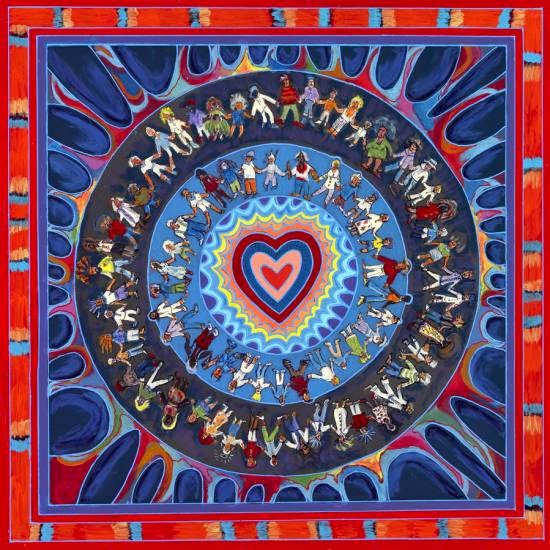
Love and hate break boundaries.
- Midrash Rabbah 55:8
Hate breaks the boundaries of the ordinary. It empowers us to do the impossible.
Hate will make us do remarkable things. Hate will blind us
to our own faults. Hate will give us superhuman strength and stamina. Hate will
get us up early in the morning to pursue the hated and keep us up late a night
thinking of how to harm them. Hate will make us do incredibly self-destructive
things. We will tear apart our own world to get at the one we hate. We will destroy everything and sacrifice
anything for hate.
And love breaks the boundaries of the ordinary. It empowers us to do the impossible. Love will help us to see ourselves in the mirrors of our beloved’s eyes. Love will give us superhuman strength and stamina. Love will get us up early to do good for our beloved and keep us up late at night thinking of how to please them. Love will make us heal and build. We will beautify our whole world to make it fit for our love. We will do everything and sacrifice anything for love.
The imperative to “Love your neighbor as yourself” or "to want for others what you want for yourself" is God's boldest dare to humanity, the challenge to break the boundaries of our own hearts. If we don't, the world is terrifying. And if we do? Love won't solve the big problems. It won't stop poverty, oppression, or violence against the innocents of this world this instant. In the end maybe opened hearts, and minds and ears will. It is just a start. An experiment. A direction. A dim flicker of light in a world that seems pitch black.
Wednesday, November 19, 2014
Yes, I still...

The moment a terror attack happens in Israel, the comments
start to come. “So do you STILL think there is someone to talk to?” “Still believe in ‘peace’ do you?” “Do you finally see who ‘these people’ are?”
The implication is that there is no rapprochement possible in the face of utter
barbarism. The only possible response to “these people” is force and lots of
it.
When I see the picture of a man in tallit and tefillin (like
me every morning) shot dead in a pool of blood in synagogue (where I too
customarily go every day) I am overcome with a wave of nausea followed by a
surge of anger. I don’t have words for the fury and the fear at the thought of
a person charging into our place of worship and hacking a fellow Jew, who, like
me, appears before God in tallit and tefillin, to death. If he weren’t just like me would I feel the
same? I don’t know. I look at the black pants, the white shirt, the build of
the man, the black striped tallis that I wear and this is deeply personal. This brutal monster has killed one of US and
I am furious.
In that, I am just the same as the person who taunts me.
In that, I am just the same as the person who taunts me.
Where I differ is that while I get that I am going to feel
more intensely when I have an affinity for another human being as a fellow Jew,
I also strive to see all human beings as “in the image of God” (so to speak, trust me on this my Muslim
friends, this really is NOT a blasphemous notion- its metaphorical). Each human being is a reflection of the
Divine majesty and precious to their Creator. Where is that well of outrage
when every single day human beings are being hacked, torn, shot for every
possible excuse? Where are my tears for the innocent of every color, race,
language, and faith?
Where I differ is that I distrust the idea of “these
people.” I don’t believe that
barbarians or the gullible idiots who
are always there to cheer such people on get to elect themselves the moral
representatives of their people. “These
people” whoever they may be in today’s news are like all people a
conglomeration of the best and worst in all of us. No people deserves to be branded by the moral
ugliness of its most despicable citizens.
Where I differ is that as much as I sometimes want to, I don’t believe that I have permission to give up. I feel compelled by the example of Abraham, who pleaded to God for the murderous idolaters of Sodom. My struggle, like his, is to strive to uplift humanity in any way that I can, not to wish for its destruction, not even the destruction of the worst of us. Abraham believed that even a few righteous people could turn around an entire world gone crazy. So I reach out to the righteous, encourage the good where I can because it’s the only plan I have got.
I push through the pain and through the fear and do what I
have to do for the sake of my conscience, for the good of my people, for the good of humanity, with as much trust in my Creator as I can
muster. So yes, even today, I still…
Wednesday, July 30, 2014
Brainstorming! Naive, Crazy and Dangerous Ideas

Sunday, July 27, 2014
The Lonely Man of Questions

http://www.salon.com/2014/07/26/israel_is_not_my_birthright/
Several people have expressed wonder as to why I would post such a thing. This is the start of an answer.
While I am surrounded by people who seem so certain, I am find myself questioning. Throughout the past two weeks, my questioning has been understood as "breaking ranks" with one or another side. My moral exploration and reflection has been dismissed as seeking "moral equivalency". From where I sit (and I think Shira Lipkin experienced the same thing) I am engaged in a genuine struggle. It is a moral struggle and a spiritual struggle. It is a struggle with myself, with my faith, with my sense of the world and sometimes with friends and family.
Here are a few of the things I struggle to understand:
- How my friends, neighbors and acquaintances so quickly manage to get their opinions in line with each other when I can not.
- How is that people who live in a pluralistic society here in America, who profoundly benefit from that society and its values of tolerance can so completely abandon those values to the extent that any kind of coexistence with "others" is unimaginable or even anathema to them?
- What God's promise of a "Promised Land" means when the grip on that land must be held through a violence that can be both oppressive and brutal
- How does what is happening in the Land of Israel relate to the Torah's "conditional use permit on the land" the promises of security in the land if we are righteous and absolute insecurity if we are not. How much of this is US, how much is THEM, how much is God?
- How much of what people say about THOSE PEOPLE is true? The claims are so black and white and exaggerated. "Palestinian mothers really hate us more than love their children. Palestinians are content to be used as human shields. Palestinian children a fed on a childhood diet of pure hate. Israelis are racist haters who won't be happy til every Palestinian is gone. Zionism is Naziism." The world is awash in these messages. What do you DO with all that besides say everything WE say is true and everything THEY say is a lie?
- How the same people who could quote hundreds of ahadith demonstrating the gentleness of Muhammad, and may be very gentle in their private lives can be so harsh in the context of strife.
- How is it that in conflict so many of us who LIVE great values in our interpersonal lives somehow drop them when we are in conflict? Polite people become rude. Merciful people start to sound cruel.
- How to square my fierce love for Judaism, Torah and the Jewish people with Rabbis and others (who may know much more than I do) who increasingly de-emphasize the Torah of kindness while promoting a Torah that endorses military force even against "civilians."
- How what are for ME deep and difficult questions have been replaced by hashtags, memes and slogans that seem to discourage any creative thinking.
- What does peace mean? Everybody seems to want it and nobody seems to want it.
I have lots of questions. These are really just a few of the greatest hits. I am too mentally exhausted to write a complete inventory.
So, if I seem confused, I am. Some of you wish I wasn't. I kind of wish you were.
Subscribe to:
Posts (Atom)